E-Commerce App Development: A Practical Planning Guide
A buyer-focused guide to defining an e-commerce app, the back-office system behind it, and a lower-risk path from discovery to launch.
9 min read

E-commerce app development should begin with the operating model, not a list of screens. Before choosing a software partner, define who will buy, how products and orders will be managed, which systems must stay synchronized, and what the first release must prove. Those decisions determine whether you need a branded mobile app, a responsive web storefront, a back-office panel, or all three.
This guide is for business owners and product leaders planning a custom commerce product. It explains the decisions that reduce scope ambiguity, prevent operational gaps, and give a development team enough context to propose a realistic roadmap.
Start with the business result
“We need an e-commerce app” can describe very different products. A retailer may want to increase repeat purchases. A marketplace may need to coordinate multiple sellers. A B2B distributor may need account-specific prices and approval flows. A service company may want customers to purchase packages and book time in one journey.
Write the first-release goal as a measurable business change. Examples include:
let existing customers reorder without contacting a sales representative;
bring mobile conversion closer to web conversion;
replace manual inventory and order updates;
launch a new direct-to-customer channel;
give franchise locations a shared catalog with local availability; or
test demand in one region before a wider rollout.
This goal becomes a scope filter. A feature belongs in the first release when it is necessary to deliver or measure the result. Useful ideas that do not support it can enter a later roadmap instead of expanding the launch indefinitely.
An e-commerce app is a connected platform
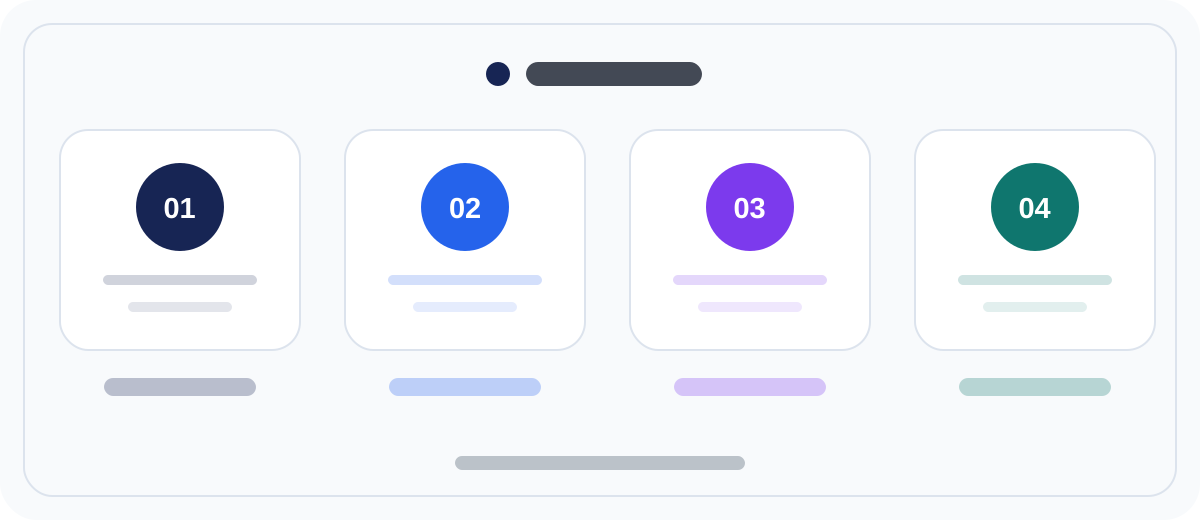
Customers see the storefront, but the business operates through the systems behind it. A practical e-commerce platform usually contains four connected layers.
Storefront
The storefront helps a visitor discover products, evaluate them, complete a purchase, and understand what happens next. It may be a responsive website, a web application, or both a website and mobile app sharing the same commerce data.
Mobile app
A dedicated mobile app is most valuable when it creates a repeat relationship: saved preferences, faster reordering, loyalty, personalized discovery, location-aware services, or notifications tied to real customer value. If most customers buy once through search, a high-performing web experience may deserve priority.
Back office
The back office is where authorized staff manage products, prices, inventory, orders, returns, campaigns, customer issues, and reporting. Treating this as an afterthought often moves work into spreadsheets and direct database requests. The customer experience is only sustainable when the operations team can run it safely.
Integrations
Payments, shipping, tax, accounting, customer relationship management, enterprise resource planning, analytics, search, messaging, and identity services may all exchange data with the platform. Each integration needs a clear owner, source of truth, failure process, and reconciliation plan.
Anemo’s e-commerce platform approach covers mobile, web, database, and back-office experiences as parts of one product rather than isolated deliverables.
Define the first customer journey
Map one complete purchase from arrival to post-purchase support. Avoid beginning with an inventory of fashionable features. Begin with questions a real customer will encounter:
How does the right product become discoverable?
Which information is needed to make a confident decision?
Can the customer understand availability, delivery, and total cost?
Which payment methods matter in the launch market?
What confirmation and tracking information will be provided?
How are cancellation, return, exchange, and support requests handled?
The answers reveal the essential product capabilities. A broad catalog may require strong search and filtering. Configurable products need reliable variant logic. Scheduled delivery needs time-slot capacity. A marketplace needs seller rules, commission handling, and dispute operations. Subscription commerce introduces renewal, failed-payment, pause, and cancellation flows.
Test the journey with realistic edge cases. What happens when stock changes during checkout? When a discount and account-specific price conflict? When payment succeeds but the order service is temporarily unavailable? These are business rules, not merely technical details.
Give operations equal weight
Every customer promise creates an operational responsibility. Same-day dispatch requires an accurate cut-off time and fulfillment workflow. Live inventory requires a trustworthy stock source. Easy returns require eligibility rules and a clear handoff to logistics and finance.
Interview the people who will operate the platform before finalizing scope. Product managers should understand:
who creates and approves catalog changes;
where stock and price data originate;
which order states staff can change;
how refunds and partial refunds are authorized;
what customer support needs to see;
which reports finance and management require; and
which actions must be logged for accountability.
A back-office dashboard should match these roles. Giving everyone the same access is rarely appropriate. A merchandising user, warehouse operator, support agent, finance manager, and administrator need different views and permissions.
Decide where data is authoritative
Connected commerce systems can disagree. The website may show one price while the enterprise system holds another. A warehouse update may arrive after the last unit has entered a customer’s cart. A shipping provider may delay an event.
For each important data type, name the system of record. Then define how other systems receive changes and what the team does when synchronization fails. At minimum, make this decision for:
products and categories;
prices and promotions;
inventory;
customer identity and consent;
orders and payments;
fulfillment and tracking; and
refunds and financial records.
This exercise prevents an integration diagram from hiding unresolved ownership. It also helps a software partner estimate complexity based on actual data flows rather than the number of visible screens.
Choose custom development for the right reasons
Custom e-commerce development is not automatically better than a configurable platform. A standard platform can be the sensible choice when the business model, catalog, checkout, and operations fit established patterns.
Custom development becomes more valuable when the differentiating workflow cannot be supported cleanly through configuration. Examples include specialized marketplace rules, complex product configuration, account-specific B2B commerce, unusual fulfillment, deeply connected internal operations, or a mobile experience central to retention.
There is also a hybrid path. A business can retain a proven commerce engine or payment provider while building custom mobile, web, and operations experiences around it. The right boundary depends on competitive advantage, ownership requirements, time to market, internal capability, and the cost of maintaining custom logic.
Ask potential partners to explain what they would build, what they would integrate, and why. A credible proposal should make those boundaries visible.
Plan delivery in evidence-producing stages
A lower-risk roadmap produces evidence before committing to the widest scope.
1. Discovery and definition
Align stakeholders on the business outcome, user groups, complete workflows, integrations, operational constraints, success measures, and release boundary. The output should be a prioritized scope and delivery plan, not simply a set of attractive screens.
2. Experience and technical validation
Prototype the highest-risk journeys and validate critical integrations. Confirm that the catalog structure, checkout rules, back-office flow, and data ownership make sense together.
3. First production release
Build the smallest coherent platform that can serve a controlled customer group. Include the monitoring, analytics, support tools, and recovery procedures needed to learn safely.
4. Controlled rollout
Release by region, customer segment, store group, or invitation cohort when possible. Watch conversion, failed payments, search behavior, fulfillment exceptions, support volume, app stability, and operational workload.
5. Expansion
Add features because evidence shows where they will improve revenue, retention, cost, or customer experience. This may include loyalty, personalization, recommendations, subscriptions, new markets, or additional sales channels.
What changes cost and timeline?
The number of screens is a weak predictor. The largest variables usually sit in the rules and connections behind them:
number and quality of external integrations;
catalog, variant, price, and promotion complexity;
real-time inventory expectations;
marketplace or multi-tenant requirements;
payment methods, currencies, tax, and regions;
native device capabilities and mobile release requirements;
migration of existing customer, product, or order data;
security, privacy, and audit expectations;
number of operational roles and approval flows; and
performance, availability, and support requirements.
A useful estimate states its assumptions. If those assumptions are unknown, a short discovery phase is more responsible than presenting a fixed promise based only on a feature list.
Questions to ask an e-commerce development partner
Use the selection process to test product thinking as well as engineering capability.
How will you translate our operating model into release scope?
Which risks should be validated before full development?
What should we buy or integrate instead of building?
How will mobile, web, back office, and backend stay aligned?
How will failed payments and integration failures be visible to our team?
Which analytics and operational signals will be available at launch?
What does ownership and handover include?
How will the product be maintained after launch?
Ask the partner to discuss a workflow, tradeoff, or risk relevant to your business. Technology names matter less than whether the team can connect technical choices to customer and operational outcomes.
Frequently asked questions
Do we need both a mobile app and a web store?
Not always. A responsive web store offers broad access and supports search-driven acquisition. A mobile app is easier to justify when repeat use, loyalty, personalization, location, notifications, or device capabilities create ongoing value. Many businesses eventually use both, but their first-release priority should follow customer behavior.
Should the back office be in the MVP?
Include the minimum operational capabilities required to run the customer promise safely. Staff need a supported way to manage orders, products, exceptions, and customer issues. Some advanced reporting or automation can wait, but critical operations should not depend on developers changing production data.
Can video consultation be part of a commerce product?
Yes, when live advice reduces uncertainty or supports a high-consideration purchase. Treat it as a complete service workflow rather than a video button. The video call app development guide explains the product and operational decisions involved.
When should we talk to a development company?
Talk to potential partners once you can explain the business result, target users, current systems, and important constraints. You do not need a complete specification. A strong discovery process should help turn those inputs into a viable release plan.
Anemo designs and builds connected mobile, web, backend, and back-office products for businesses. Discuss your e-commerce product with Anemo to turn your operating model and customer journey into a practical delivery roadmap.